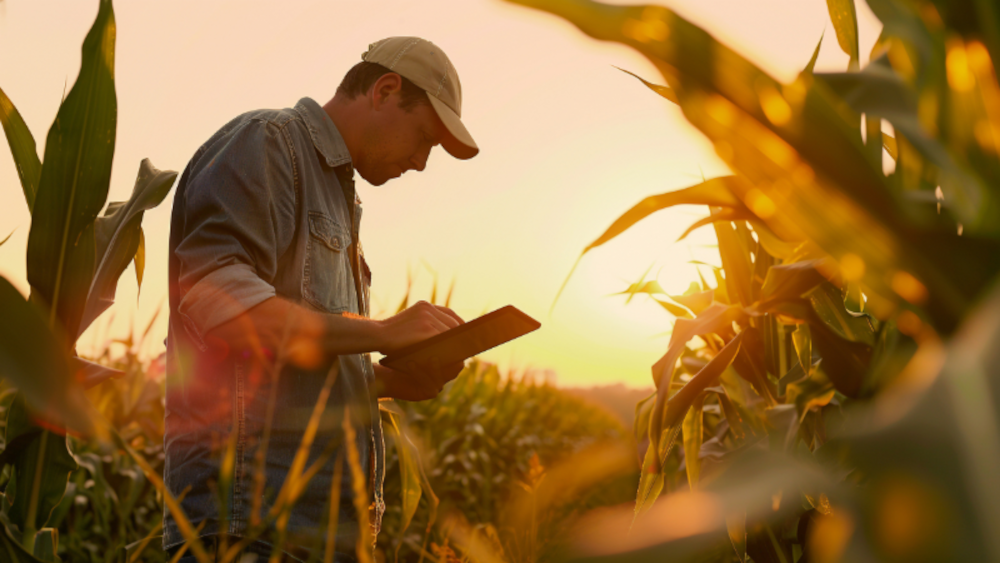
UnderGround Weather Launches Technical Success Agronomy Team to Help Customers Turn Real-Time Soil Data into Better Field Decisions
Adilson Nunes-Brown, PhD, and Alyssa Beauchamp join to lead customer adoption, agronomic support and partner training as real-time soil intelligence expands across North America and international markets
SAN DIEGO, CA. — 22 October 2026 — UnderGround Weather™, the real-time soil intelligence company formerly known as AquaSpy, today announced the formation of its Technical Success Agronomy organization and two hires to build it: Adilson Nunes-Brown, PhD, as Senior Director, Technical Success Agronomy, and Alyssa Beauchamp as Technical Success Agronomist – Midwest & Strategic Accounts.
The team will work directly with growers, agronomists, retailers and enterprise partners using Crophesy LS-N® and the UnderGround Weather Reporter™. Its job is to help customers deploy sensors, interpret continuous multi-depth data on nitrate, moisture, ORP, salinity and temperature, and turn what is happening underground into more confident nutrient and irrigation decisions above ground.
Real-time soil intelligence asks agronomists to work differently. Continuous data rarely looks like a point-in-time soil test, and its value comes from reading it in context: what the crop is doing, how water is moving nitrate through the profile, and when a change warrants a closer look in the field. The Technical Success team exists to close that gap, so customers move beyond collecting data to gaining measurable value from it.
“Adilson and Alyssa bring the science and the field experience to help agronomists read what the soil is telling them and act on it. Building this team now means the retailers and partners planning 2027 programs with us will have agronomic support from day one,” said Kathleen Glass, VP of Sales, Marketing and Customer Success at UnderGround Weather.
Adilson Nunes-Brown, PhD — Senior Director, Technical Success Agronomy
Nunes-Brown will lead the Technical Success organization, overseeing customer adoption and retention, agronomic standards, technical support and the expansion of the company’s customer success capabilities. He brings more than 20 years of experience across agronomy, crop science, agricultural research, controlled-environment agriculture, precision agriculture and technical leadership, including leading agronomy programs, managing multidisciplinary teams and translating complex data into practical recommendations for growers.
He holds a PhD in Crop Science and has authored multiple scientific publications on nitrogen management, crop response, soil-water relationships and agricultural production systems. His career spans research, product development, technical services and commercial agriculture.
Fluent in English, Portuguese and Spanish, Nunes-Brown extends UnderGround Weather’s ability to support customers and partners across North America, Latin America and other international markets. He is based in San Diego, where he will work closely with company leadership to build a Technical Success organization that scales with the company’s growth.
Alyssa Beauchamp — Technical Success Agronomist, Midwest & Strategic Accounts
Beauchamp joins UnderGround Weather from Nutrien Ag Solutions, where she worked across field research, trial management, data collection, crop evaluation and customer-facing agronomy programs. That work gave her a practical understanding of how growers make decisions in the field.
In her new role, Beauchamp will help Midwest customers and strategic accounts deploy Crophesy LS-N systems, interpret real-time soil intelligence and convert those insights into nutrient and irrigation decisions. She will also lead onboarding for strategic accounts and training for dealers and agronomists.
Together, Nunes-Brown and Beauchamp form the foundation of UnderGround Weather’s Technical Success organization. The team’s focus areas include:
- Sensor deployment and implementation in the field
- Agronomic interpretation of real-time nitrate, moisture, ORP, salinity and temperature data
- Onboarding and expansion for enterprise and strategic accounts
- Training for dealers, retail agronomists and global partners
- Feeding customer insights back into product development
The goal is to help growers, agronomists, retailers and enterprise partners make nutrient and irrigation decisions with fewer surprises and better outcomes.
Agronomists, retailers and partners interested in working with the Technical Success team can reach UnderGround Weather through the Contact page at aquaspy.com.