
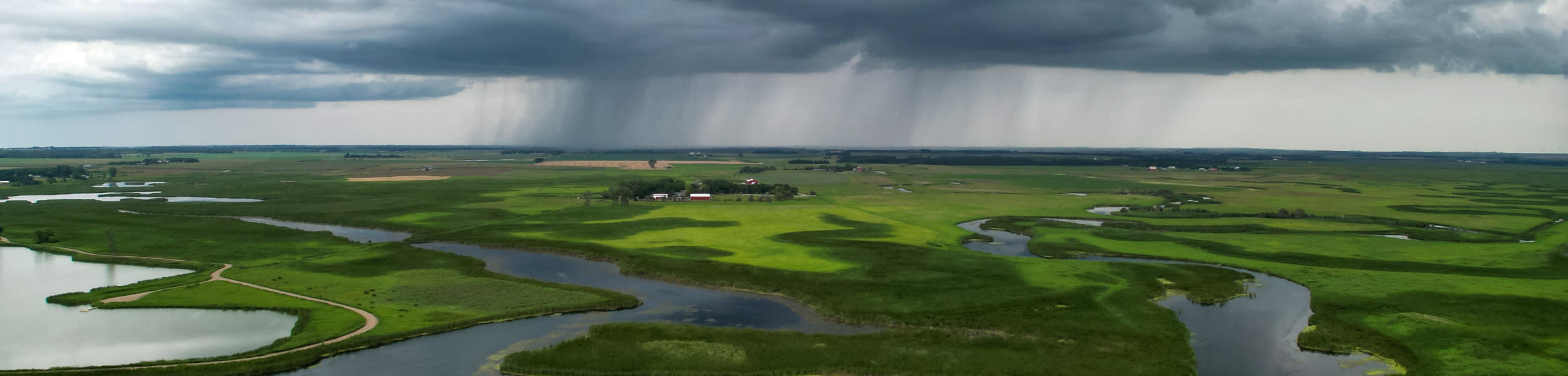
Reducing Fertilizer Runoff Naturally: Practical Strategies to Protect Waterways
Fertilizer runoff remains one of the most persistent environmental challenges facing modern agriculture. While nutrients such as nitrogen and phosphorus are essential for crop productivity, their movement beyond the root zone can impair water quality, disrupt ecosystems, and invite increased regulatory scrutiny.
For farmers, agronomy consultants, and agricultural researchers alike, the question is no longer whether runoff should be addressed, but how to reduce it effectively while maintaining yields and economic viability. This article examines the causes and impacts of fertilizer runoff and outlines proven science-based strategies to mitigate nutrient losses naturally.
Understanding Agricultural Runoff
What Is Agricultural Runoff?
Agricultural runoff occurs when water from rainfall, irrigation, or snowmelt moves across or through soil, carrying dissolved nutrients, sediments, and agrochemicals into nearby surface waters or groundwater. Runoff may occur as surface flow or as subsurface leaching below the root zone.
Common Sources of Farm Runoff
Key contributors include:
- Excess or poorly timed fertilizer applications
- Bare or compacted soils with limited infiltration
- Over-irrigation or uneven water distribution
- Sloped fields lacking protective vegetation
- Tile-drained systems that accelerate nutrient transport
Impacts on Local Ecosystems
When nutrients leave the field, they often accumulate downstream. Elevated nitrate and phosphorus concentrations can trigger eutrophication, harmful algal blooms, oxygen depletion, and loss of aquatic biodiversity. These effects can extend far beyond the originating field.
Regulatory Landscape
Many U.S. states now regulate nutrient runoff through nutrient management planning, nitrogen application timing restrictions, reporting requirements, and water quality monitoring programs. Compliance expectations are increasing, particularly in watersheds impaired by nitrates or phosphorus loading.
State Regulatory Frameworks for Agricultural Nutrient Runoff — Summary Table
| State | Type of Regulation (Mandatory vs Voluntary) | Scope and Key Regulatory Mechanisms | Focus on Agricultural Runoff Control |
| Nebraska | Mandatory (permit-linked nutrient management) | The Nebraska Nitrate Reduction Incentive Act (NiRIA), established by LB 1368 in 2024, is a state program offering incentive payments to farmers for reducing commercial nitrogen fertilizer use by at least 15% or 40 lbs/acre (whichever is less). | Targeted regulation to combat groundwater nitrate pollution and potentially lower pediatric cancer risks, managed in partnership with Natural Resources Districts (NRDs). |
| Ohio | Mandatory | Restricts fertilizer application on frozen, snow-covered, or saturated soil in key watersheds and requires fertilizer applicator certification (for farmers). | Direct regulation of application timing and training to reduce runoff risk. |
| Minnesota | Mandatory | State buffer requirements for public waters; nutrient application restrictions near water and seasonal constraints. | Buffers and application restrictions are explicitly targeted at runoff control. |
| Pennsylvania | Mandatory | Nutrient management plans required for CAFOs and manure applications with setbacks from surface waters. | Manure/nutrient application regulation to reduce on-site runoff and transport to streams. |
| Indiana | Mandatory | Restrictions on land application of unmanipulated organic fertilizers to frozen/snow-covered ground near water, with setback distances. | Targeted restriction near water bodies to control runoff pathways. |
| Massachusetts | Mandatory | Plant nutrient regulatory authority covering agricultural lands and nutrient applications. | Statewide legal authority to regulate nutrient applications. |
| Illinois | Structured strategy with mix (voluntary + some mandates) | Nutrient Loss Reduction Strategy with measurable targets; emphasis on practices but not direct fertilizer limits. | State strategy to coordinate practices and measurement; not predominantly regulatory. |
| Iowa | Structured strategy (mostly voluntary) | Statewide nutrient reduction strategy but largely voluntary for agricultural producers. | Voluntary emphasis, limited direct punitive regulation. |
| Michigan | Voluntary with regulatory linkage for assurance | Michigan Agriculture Environmental Assurance Program (MAEAP) is voluntary but tied to regulatory assurance. | Incentive-oriented with indirect regulatory recognition. |
| California | Structured strategy (mostly voluntary) | California’s nitrate reduction requirements focus on protecting public health by enforcing a Maximum Contaminant Level (MCL) of 45 mg/L nitrate as nitrate (NO3) or 10 mg/L nitrate as nitrogen (N), requiring public water systems to monitor and treat contaminated groundwater, especially in areas like the Central Valley. | Voluntary coordination with strategies including source control, local management zones, providing replacement water, and strict treatment for reuse. |
Effects of Fertilizer Runoff in Agriculture
Fertilizer runoff can affect groundwater, fresh water systems as well as coastal and ocean waters.
Chemical Processes Driving Runoff and Leaching
Nitrogen fertilizers, particularly nitrate (NO₃⁻), are highly soluble and mobile in soil water. When precipitation or irrigation exceeds crop uptake and soil holding capacity, nitrate readily moves downward or laterally with water flow.
The Role of Nitrogen
Nitrogen is the primary nutrient implicated in groundwater contamination. Unlike phosphorus, which often binds to soil particles, nitrate does not readily adsorb to soil colloids, making it especially vulnerable to leaching in coarse-textured soils or under high moisture conditions.
Volatilization and Indirect Loss Pathways
Ammonium-based fertilizers can volatilize as ammonia gas when left on the soil surface, particularly under warm, high-pH conditions. While volatilization does not directly pollute water, it reduces nitrogen use efficiency, often prompting additional applications that increase runoff and leaching risk later in the season.
Impacts on Marine and Coastal Systems
Nutrient runoff entering estuaries and coastal waters can fuel algal blooms that block sunlight and consume dissolved oxygen as they decompose. These hypoxic or “dead zone” conditions reduce fish populations, disrupt food webs, and harm commercial fisheries.
Consequences for Freshwater Systems
In rivers, lakes, and reservoirs, nutrient enrichment degrades drinking water sources, increases water treatment costs, and promotes cyanobacteria capable of producing toxins harmful to humans and livestock.
Long-Term Environmental Effects
Over time, repeated nutrient losses reduce soil nutrient use efficiency, increase input costs, and contribute to cumulative watershed-scale degradation. These long-term impacts often outlast individual growing seasons and complicate restoration efforts.
Agricultural Strategies to Reduce Fertilizer Runoff
Cover Crops and Crop Rotation
Cover crops scavenge residual nitrogen, improve soil structure, and increase water infiltration. Diverse crop rotations enhance root depth variability and microbial activity, reducing nutrient accumulation in vulnerable soil layers.
Buffer Strips and Constructed Wetlands
Vegetated buffer strips along field margins intercept surface runoff, while wetlands slow water movement and promote nutrient uptake and denitrification. These landscape-level tools are especially effective in protecting adjacent streams and drainageways.
Best Practices for Fertilizer Application
Effective nutrient stewardship (4R’s/SMART Approach) includes:
- Applying fertilizer at the right rate, time, and placement
- Matching nitrogen form to soil and weather conditions
- Splitting applications to align with crop demand
- Avoiding applications ahead of heavy rainfall or irrigation
These practices improve nutrient use efficiency while minimizing loss pathways.
Monitoring Below-Ground Risk with Crophesy LS-N Sensors
Advances in in-ground sensing now allow growers and consultants to directly observe nitrogen dynamics below the soil surface. Crophesy LS-N sensors by AquaSpy provide continuous, below-ground measurement of available nitrate and moisture, in addition to redox potential, temperature and salinity across the active root zone.
By identifying when and where nitrate is accumulating or moving downward, these sensors help:
- Detect early leaching risk before losses occur
- Optimize nitrogen timing and rates in-season
- Evaluate the effectiveness of conservation practices
- Support data-driven nutrient management decisions
For both applied researchers and commercial operations, continuous subsurface data closes a critical visibility gap between fertilizer application and environmental outcome.
Conclusion
Reducing fertilizer runoff is not a single practice, but a systems-level approach that combines sound agronomy, soil health principles, and real-time monitoring. By integrating natural mitigation strategies with modern sensing technologies, agriculture can protect water resources while sustaining productivity and profitability.
For farmers, consultants, and researchers alike, the opportunity is clear: better nutrient decisions begin below the surface, where both crops and conservation outcomes take root.