
El Niño 2026–27: What California Almond Growers Should Know About Soil Moisture
El Niño Is Coming. Is Your Orchard Ready for What’s Happening Underground?
This winter could bring significant opportunities for California growers to capture water. But more rainfall doesn’t automatically mean better soil conditions, healthier roots or more efficient nutrient management.
California growers are heading into the 2026–2027 winter with something they haven’t seen in a while: the prospect of a very strong El Niño.
According to NOAA’s November 12 ENSO update, El Niño continues to strengthen, with a strong-to-very strong event likely through early 2027. Seasonal forecasts are pointing toward increased precipitation potential across parts of California and the Southwest.
For almond growers, this could mean an important opportunity to replenish soil moisture, support groundwater recharge and prepare orchards for the 2027 growing season.
But there’s another side to the forecast.
The real question isn’t simply how much rain will fall. It’s what happens to that water once it reaches the soil.
More Rain Doesn’t Always Mean More Available Water
For permanent crop growers, winter precipitation can be valuable. It can replenish soil moisture, reduce irrigation demand and, where conditions and infrastructure allow, contribute to groundwater recharge.
However, rainfall totals alone don’t tell the whole story.
How quickly is water moving through the soil profile? Is it replenishing the active root zone, moving below it or accumulating in areas with poor drainage?
In almond orchards, these distinctions matter.
Extended periods of saturated soil can limit oxygen availability around roots, creating unfavorable conditions for root function and increasing concerns about root and crown diseases such as Phytophthora. Conversely, rainfall that moves rapidly through the profile may carry mobile nutrients, including nitrate, beyond the active root zone.
The difference between beneficial soil water replenishment and potentially problematic water movement isn’t always visible from the orchard surface.
What Happens to Nitrate When Winter Rains Arrive?
Nutrient management is another important consideration heading into a potentially wet winter.
Almond growers invest significantly in managing nitrogen to support tree development, productivity and long-term orchard health. But nitrogen doesn’t remain stationary in the soil.
Nitrate is mobile. Its movement is influenced by water availability, soil characteristics, drainage and the conditions within the soil profile.
When substantial rainfall moves through the root zone, residual nitrate may move with it.
That raises several important questions for growers and their agronomists:
- How much nitrate remains in the soil profile following harvest?
- At what depths is nitrate accumulating?
- Is moisture moving nitrate through the active root zone?
- Are there periods of saturation or reduced soil oxygen that could influence nitrogen transformations?
- What does the soil’s behavior tell us about nutrient availability heading into spring?
A traditional soil sample can provide a useful snapshot of nutrient conditions at a particular point in time. But it cannot show the continuous movement and changing conditions that occur between sampling dates.
Understanding that movement can help agronomists make better-informed decisions about spring fertility programs and nutrient stewardship.
The Opportunity: Capture More Water and Understand It Better
California is increasingly focused on groundwater sustainability and making the most of available water supplies.
The California Department of Water Resources has emphasized the importance of preparing for El Niño while improving the state’s ability to capture and store water during wet periods.
For growers with suitable soils, infrastructure and access to approved recharge programs, winter precipitation may present opportunities beyond simply reducing irrigation demand.
But effective water management requires understanding what is happening beneath the orchard.
Consider the questions that continuous soil intelligence can help answer:
1. Is the root zone actually replenishing?
Rainfall measurements tell you how much precipitation arrived. Soil moisture measurements show how the soil profile responds and where water is accumulating.
2. Are conditions becoming too wet?
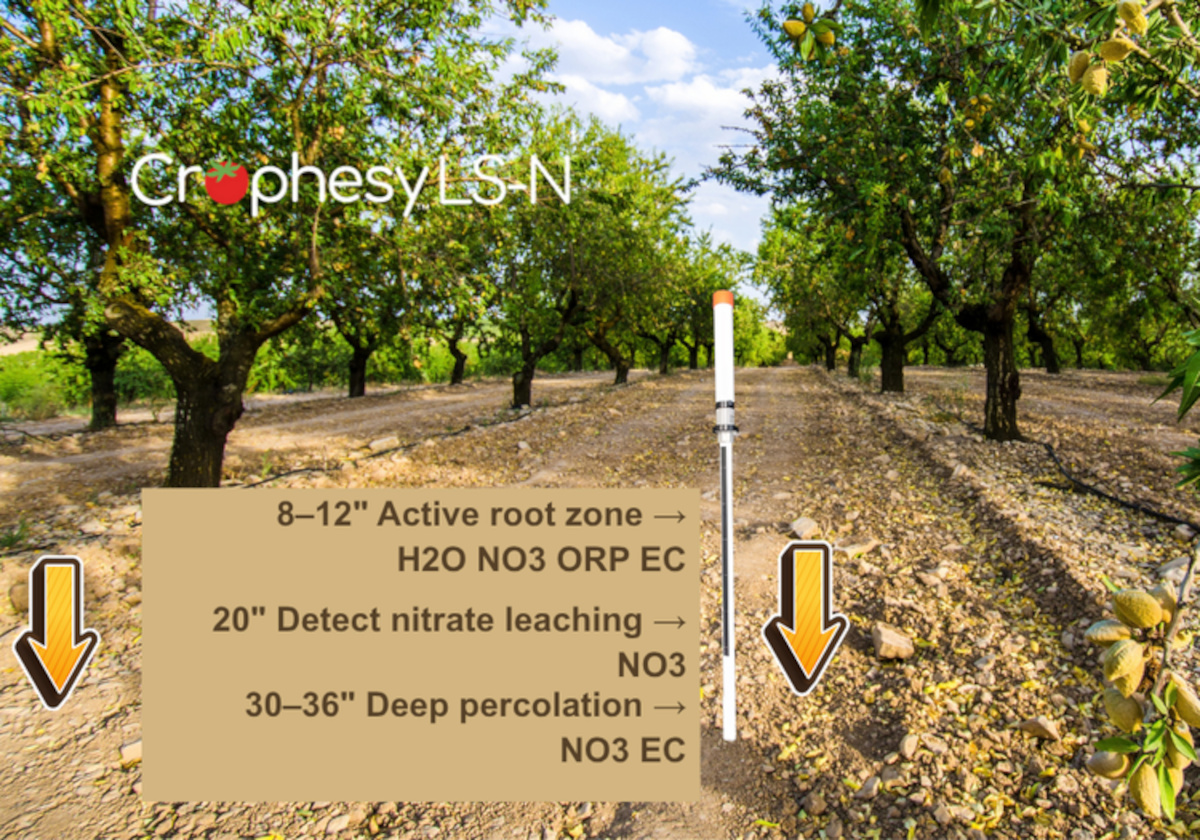
Extended periods of high moisture can create unfavorable root-zone conditions. Monitoring moisture alongside oxidation-reduction potential (ORP) can provide additional insight into changing soil conditions and oxygen availability.
3. Is nitrate moving through the profile?
Continuous nitrate measurements provide visibility into changing nitrate concentrations at different soil depths, helping agronomists better understand nutrient behavior during periods of significant water movement.
4. When should irrigation resume?
After a wet winter, growers shouldn’t have to rely exclusively on the calendar or generalized assumptions about how much water an orchard received. Understanding actual soil moisture conditions can provide a more informed starting point for irrigation decisions.
From Weather Forecasts to Underground Intelligence
Weather forecasts tell us what may happen above ground. But they don’t tell us how individual orchards will respond.
Soil type, orchard age, root distribution, drainage, irrigation history and management practices all influence what happens beneath the surface.
That’s where continuous soil intelligence becomes valuable.
UnderGround Weather combines real-time measurements of soil moisture, nitrate, oxidation-reduction potential (ORP), salinity and temperature through its Crophesy LS-N sensor system.
With UnderGround Weather Reporter™, that information is transformed into actionable soil intelligence, helping agronomists interpret changing underground conditions and better understand the relationship between water and nutrients.
Instead of relying exclusively on periodic soil samples or irrigation schedules, growers and their advisors can see how soil conditions evolve over time.
For specialty crop growers, particularly those managing long-term investments in permanent crops like almonds, that visibility can make a meaningful difference in how they approach water and nutrient management.
Prepare for the Rain. Understand What Happens Next.
El Niño doesn’t guarantee a wet winter in every California growing region, and seasonal forecasts are not a substitute for local weather information.
But the possibility of significant precipitation makes this an important time to think beyond rainfall totals.
Are your orchards prepared to manage excess water? Can you identify changing conditions within the root zone? Do you know what is happening to residual nitrate? Will your spring irrigation and fertility decisions be based on what actually happened underground?
The opportunity isn’t simply to receive more rain.
It’s to make better use of every inch of water while understanding how it affects the soil, roots and nutrients that support your next crop.
This winter, don’t just watch the weather.
Watch what’s happening underground.
Want to understand what’s happening beneath your orchard? Talk with an UnderGround Weather specialist or your local agronomy advisor about bringing continuous soil intelligence to your operation.
Resources: