
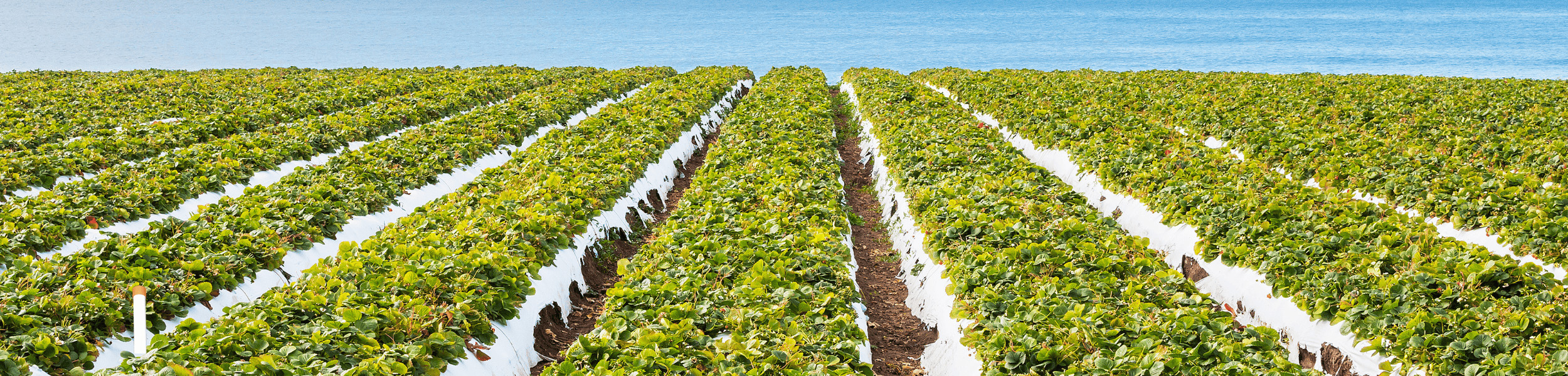
ORP Dynamics in Strawberries Grown Under Plastic Sheeting
Plasticulture has transformed strawberry production. Raised beds, drip irrigation, and polyethylene mulch improve early vigor, suppress weeds, and increase yield consistency. Regions like California and Florida rely heavily on this system for commercial strawberry production.
But beneath the plastic, a different story unfolds.
One that is electrochemical.
One that directly affects oxygen availability, nitrogen fate, root health, and disease pressure.
That story is written in oxidation–reduction potential (ORP).
What ORP Actually Measures
ORP (measured in millivolts) quantifies the electron activity of the soil environment — effectively indicating whether conditions are oxidative (oxygen-rich) or reductive (oxygen-limited).
In practical agronomic terms:
- High ORP (oxidative conditions) → Oxygen available, aerobic microbes dominant
- Low ORP (reductive conditions) → Oxygen limited, anaerobic processes begin
For strawberry systems, this distinction matters immensely because roots are shallow, fibrous, and highly sensitive to hypoxia.
How Plastic Mulch Alters the Soil Microenvironment
Plastic sheeting modifies three primary drivers of ORP:
1. Gas Exchange Is Restricted
Polyethylene mulch reduces direct atmospheric exchange. Oxygen diffusion into the soil profile is slower, especially when beds are irrigated frequently.
After irrigation events:
- Soil pores fill with water
- Oxygen diffusion declines
- Microbial respiration consumes remaining O₂
- ORP drops
In poorly structured soils, this drop can be sharp and prolonged.
2. Temperature Increases Microbial Activity
Black plastic warms soil earlier and more consistently.
Warmer soils increase:
- Microbial respiration rates
- Root metabolic demand
- Carbon oxidation
In saturated conditions, that increased biological activity accelerates oxygen depletion, driving ORP downward more quickly than in uncovered systems.
The combination of heat + moisture + restricted gas exchange creates a narrow margin for maintaining oxidative conditions.
3. Irrigation Frequency Matters More Than Volume
Strawberries under plastic typically rely on drip irrigation. Small, frequent pulses are common.
However, if pulses are too frequent:
- Soil remains near saturation
- Oxygen diffusion cannot recover between events
- ORP stabilizes at lower levels
Even if moisture levels appears “safe,” redox may indicate emerging anaerobic stress.
This is where traditional irrigation metrics can miss what ORP reveals.
Nitrogen Implications Under Plastic
Reductive conditions (lower ORP) alter nitrogen pathways.
When ORP drops sufficiently:
- Nitrate (NO₃⁻) can be reduced through denitrification
- Nitrous oxide (N₂O) emissions increase
- Plant-available nitrogen declines
In plasticulture systems with fertigated nitrogen, this creates risk:
You may be applying nitrogen precisely — yet losing it electrochemically.
ORP becomes an early warning indicator of when nitrogen efficiency is being compromised.
Root Health and Disease Pressure
Strawberries are particularly sensitive to root-zone oxygen levels.
Lower ORP environments favor:
- Anaerobic microbes
- Certain root pathogens
- Iron and manganese solubility shifts
Extended reductive conditions predispose plants to stress even before visible canopy symptoms appear.
By the time leaves show decline, the redox imbalance has often been present for days.
The Vertical Gradient Under Raised Beds
One often overlooked factor in plasticulture is the vertical ORP gradient.
In raised beds:
- The upper few inches may remain oxidative
- The lower root zone can become moderately to strongly reductive after irrigation
Strawberry roots commonly extend 12–18 inches. If the lower profile shifts redox state repeatedly, nutrient dynamics and root performance are affected even when surface conditions appear ideal.
This gradient cannot be inferred from surface moisture alone.
Strategic Implications for Berry Growers
Monitoring ORP in strawberries under plastic can inform:
- Irrigation interval optimization
- Nitrogen timing adjustments
- Bed design and drainage improvements
- Early detection of anaerobic stress
- Reduced denitrification risk
Plasticulture improves yield potential — but it also intensifies the need for precision in oxygen management.
Because under plastic, oxygen becomes a managed input.
The Bottom Line for Berry Growers
Plastic sheeting changes more than weeds and temperature.
It reshapes the electrochemical environment of the soil.
And in strawberries — where root sensitivity, nitrogen efficiency, and disease pressure intersect — ORP becomes one of the most informative indicators of what is actually happening below the canopy.
You cannot see ORP.
But it is quietly determining whether your root zone is working with you — or against you.