






How to grow tomatoes
- Total world production for tomatoes was 45.8M tonnes in 2024
- Scientifically a fruit, tomatoes are the world’s most popular fruit, followed by bananas
- China was the leading producer in 2024 with 11M tonnes, California second with 10.4M tonnes
- Mexico is the world leading exporter of tomatoes, with the U. S. importing 99.8% of Mexico’s exports
- First traced to the Aztecs in 700AD, tomatoes were introduced to Europe in the 1500’s. Many Europeans thought they were poisonous.
Growing tomatoes
- Will grow in many soil types, but sandy loam with good drainage is best
- Determinate plants have a defined growing season
- Indeterminate plants grow year-around
- Tomatoes are grown as annuals, but they are actually perennials
- Can be grown in the field from seed, but most are started in greenhouses and transplanted
- Must be started after last frost. Plastic mulch can help the soil temperature stabilize sooner.
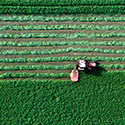
- Furrowed mounds covered in plastic mulch is the most common approach
- Many tomatoes are grown in greenhouse or high tunnel all year
- Tomatoes require cross-pollination, which can be achieved in the absence of bees by mechanical shaking
- Can be grown in the field from seed, but most are started in greenhouses and transplanted
- Seeds require carefully managed soil moisture
- The main portion of the roots are within 12 inches of the surface
The market for tomatoes
Total global output for tomatoes (fresh and processed) in 2024 is approximately 190M tonnes. Estimated global tomato processing volume was estimated at 45.8M tonnes. California is the world’s second-largest tomato producer behind China. The state saw a reduction in output, down 1.74 million short tons to 11 million short tons which was thought to be due to successive heat waves. Mexico is the worlds largest exporter of tomatoes with 26.8% of the total in 2024, followed by Netherlands, Morocco, Spain and France. These four accounted for over 70% of tomatoes exported in 2024. Overall the total value of the export market for all exporting countries exceeded US$12.4B. Morocco overtook Spain in 2024 to become the third largest exporter of tomatoes for 2024.
Challenges growing tomatoes
Tomatoes can be very vigorous with a lot of axial growth. This must be trimmed regularly in some crops as the plants can effectively choke each other and limit fruit growth. Because tomatoes are in the Nightshade family, they take nitrogen from the soil, and should not be replanted in the same soil without heavy application of nitrogen-rich fertilizer. Many growers elect to rotate tomatoes with nitrogen-fixing crops such as legumes. Tomatoes are very susceptible to frost, one freeze and it is unlikely the plants will recover. Tomatoes need cross-fertilization, and in the absence of bees this can be an issue, solved either by mechanical shakers or on smaller properties gentle shaking by hand.
One of the biggest issues facing tomatoes and several other row fruits and vegetables is the use of plastic mulch. Long sheets of black plastic are stretched over the growing mounds and fastened down. At planting, holes are poked in the plastic at pre-set intervals and the transplants or seeds are installed. The mulch keeps the soil warm and controls weeds on the mounds. Unfortunately, at end of season vast quantities of non-recyclable plastic are rolled up and thrown away. While biodegradable covers exist now, they are not yet approved for use by growers.
Nitrogen Use Efficiency for Tomatoes
NUE for tomatoes is highly variable depending on environment, as many tomatoes are grown in various enclosures. NUE for tomatoes can be as high as 80% under lab conditions. The accepted optimum distribution of nitrogen fertilizer can vary dramatically, in Florida recommended rate is currently 224 kg/ha, but rates over 470 kg⋅ha are common.

How can the nitrogen use efficiency be improved?
- Fertigation through drip systems is common with tomatoes, and as a result careful irrigation management can keep nitrate in the drip zone longer for uptake for tomatoes with plastic mulch applied, leaching is a negligible issue
- Controlled release fertilizers can be very effective if it does not get too warm during the growing cycle
Contact AquaSpy
AquaSpy Crophesy for Tomatoes
With a Crophesy LS-N annual subscription, you receive a free simple, three-sensor or six-sensor, wireless, soil moisture probe. Place these rugged, water-tight probes throughout your tomato field and connect them easily to the Cloud for hands-free data uploads throughout the day.
Then you can instantly monitor soil and crop health for all of your tomatoes. And if you want to test the soil in other areas, you can quickly and easily move the moisture probe, which is battery-powered and provides season-long insight.
While you can look at the visual analysis of leaves, spending hours in your field, Crophesy enables you to open your app from anywhere and show you what kind of nourishment is available in your soil at your tomato crop root depth. With this data, you can determine when the active root zone needs vital nutrients.
In addition to nitrate (NO3-N ppm) data, the Crophesy LS-N app can show you:
- Nitrification and Denitrification (ORP mv)
- Moisture consumption at the root level
- Salinity level in the active root zone
- Root depth
- Soil temperature near the sensors
- Irrigation depth
And it tells you all this without you having to step foot in your tomato field.